
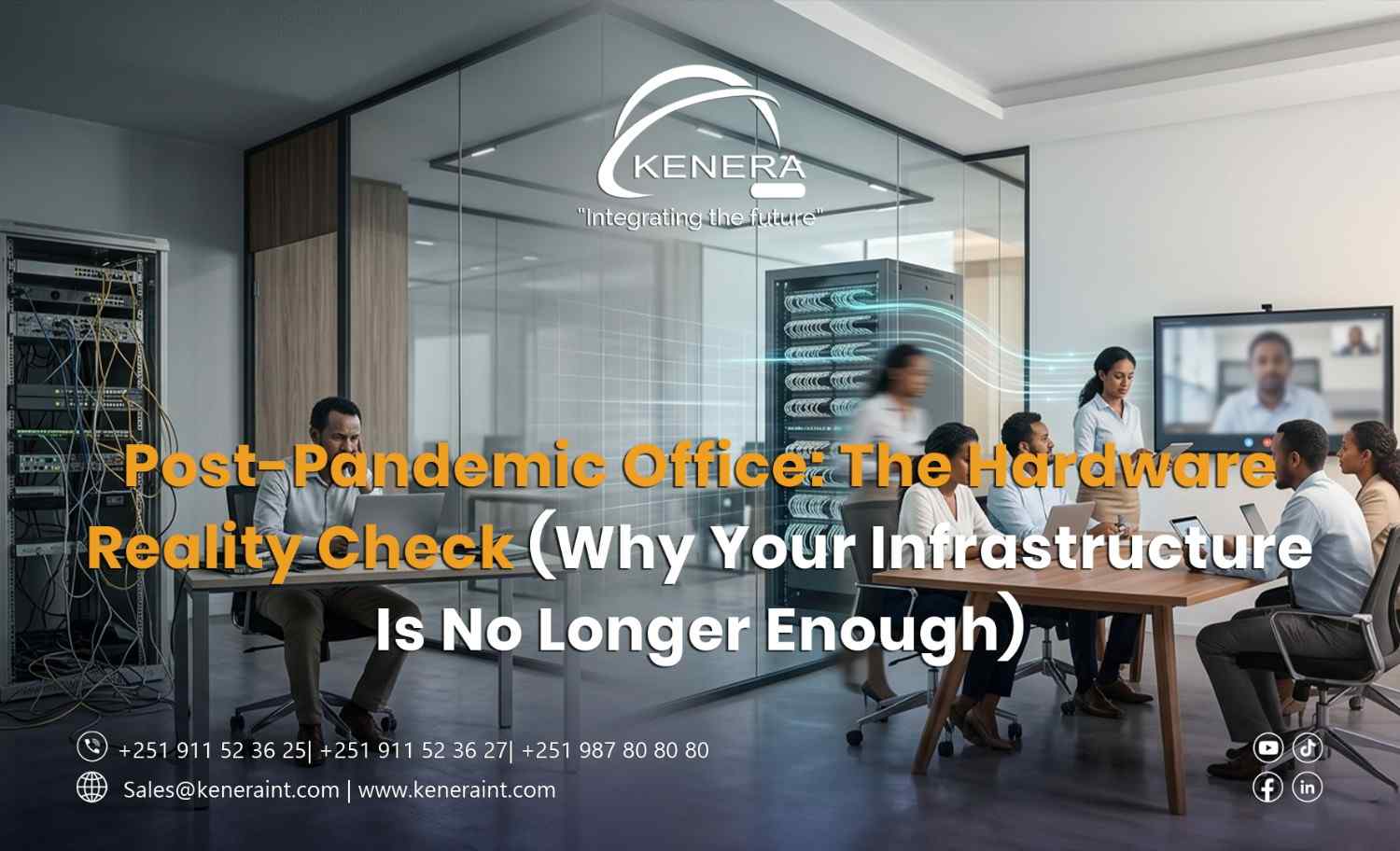
The Office Has Changed — Has Your Hardware?
The post-pandemic workplace is no longer defined by physical walls or fixed desks.
It is hybrid, distributed, and always connected.
Employees now move seamlessly between:
- Office environments
- Remote locations
- Mobile workspaces
This shift has transformed not just how businesses operate but what their IT infrastructure must support.
Yet many organizations are still relying on pre-pandemic hardware strategies designed for a completely different world.
The result?
👉 Performance gaps
👉 Security risks
👉 Productivity bottlenecks
The modern workplace demands a hardware reality check.
The traditional office model assumed:
- Centralized systems
- On-site access
- Controlled environments
Today’s reality is different:
- Users connect from anywhere
- Devices operate across multiple networks
- Workloads are distributed across cloud and on-premise systems
This evolution has placed unprecedented pressure on hardware infrastructure.
Older desktops and laptops were not built for:
- Video conferencing at scale
- Cloud-based applications
- Multi-tasking across platforms
This leads to:
- Sluggish performance
- User frustration
- Reduced productivity
Pre-pandemic networks were designed for predictable, in-office usage.
Now they must support:
- High-bandwidth collaboration tools
- Remote access connections
- Real-time data synchronization
Outdated switches, routers, and access points create:
- Latency
- Connectivity issues
- Unstable user experiences
Traditional firewalls and perimeter-based systems assume:
- Users are inside the network
- Threats are external
In a hybrid environment:
- Users operate outside the perimeter
- Devices connect from untrusted networks
Without modern security hardware, organizations face:
- Increased attack surface
- Weak access control
- Limited threat visibility
Legacy servers struggle with:
- Dynamic workloads
- Cloud integration
- Real-time processing demands
This results in:
- Performance bottlenecks
- Downtime risks
- Limited scalability
Modern collaboration requires:
- High-quality audio and video systems
- Seamless integration with platforms
- Smart conferencing hardware
Old meeting setups create:
- Poor communication experiences
- Inefficient collaboration
- Reduced engagement
- Declining productivity
- Increased cybersecurity risk
- Higher long-term operational costs
- Reduced competitiveness
- Employee dissatisfaction
🚀 Upgrade Your Infrastructure
Your hardware should empower your business not hold it back.
Get Started