
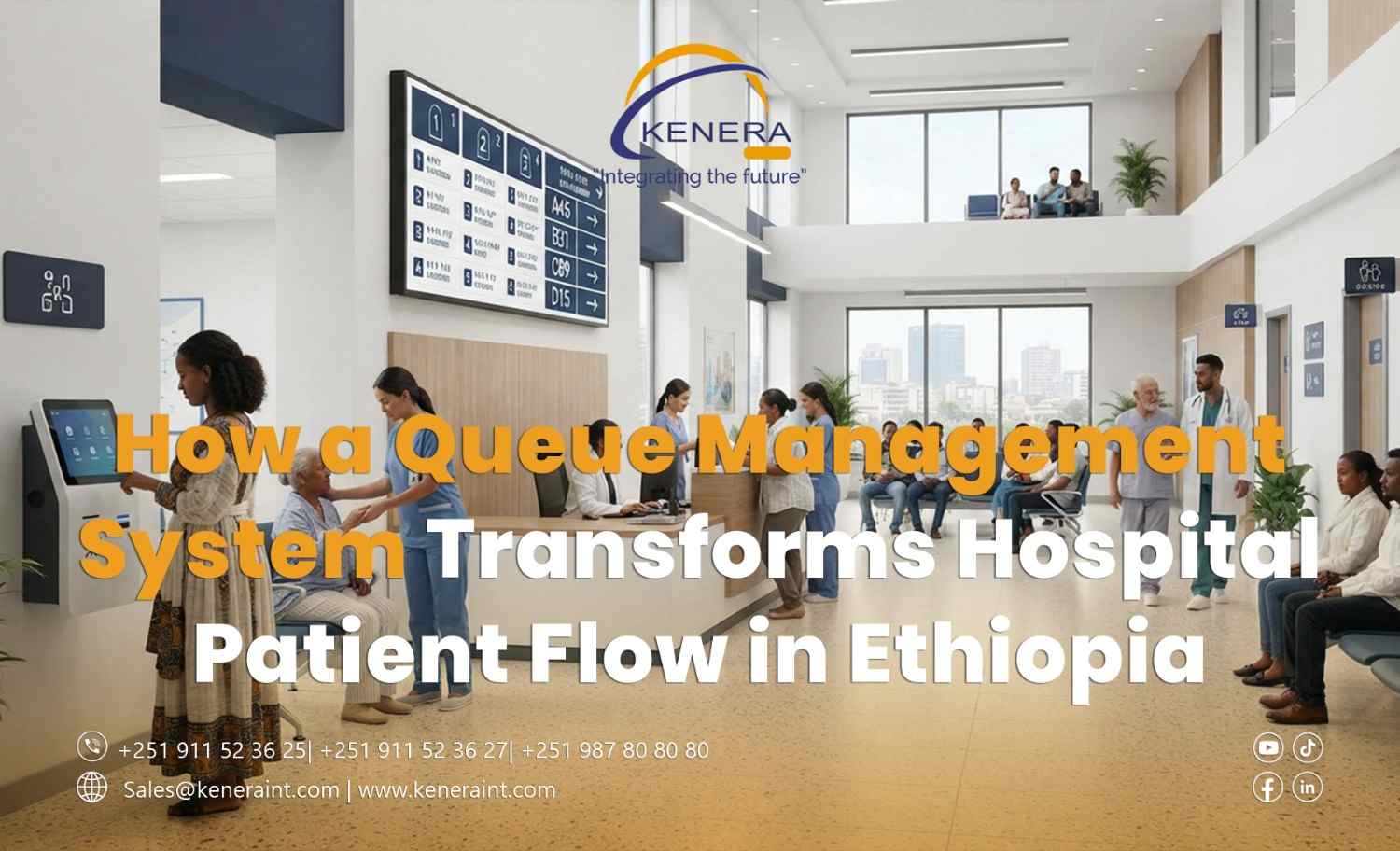
How a Queue Management System Transforms Hospital Patient Flow in Ethiopia
Efficient patient flow is one of the most important operational challenges facing hospitals and healthcare facilities in Ethiopia. From outpatient registration and medical consultations to laboratory testing, billing, and pharmacy services, patients often pass through multiple departments before completing a single hospital visit. When these processes rely on manual queues, disconnected registration procedures, and limited communication between service points, hospitals can experience overcrowded waiting areas, prolonged waiting times, and inefficient resource utilization.
A hospital queue management system provides a structured approach to coordinating these activities. By combining electronic ticketing, intelligent patient routing, digital queue displays, and real-time operational analytics, healthcare facilities can improve the organization of patient services while giving administrators better visibility into daily operations.
For hospitals in Addis Ababa and other Ethiopian cities, implementing a smart queue management system is not simply about replacing physical waiting lines. It is an opportunity to modernize patient service delivery, improve departmental coordination, and build a more efficient healthcare environment.
1. Understanding the Challenges of Hospital Patient Flow in Ethiopia
Patient flow refers to the movement of patients through different stages of healthcare delivery, from arrival and registration to consultation, diagnostic services, treatment, and discharge.
Unlike conventional customer-service environments, hospitals must coordinate multiple clinical and administrative workflows. A patient visiting an outpatient department may need to register, complete an initial assessment, consult a physician, undergo laboratory testing, return for clinical review, and collect prescribed medication.
When these processes are managed independently, delays in one department can affect the entire patient journey.
Common operational challenges include:
Overcrowded registration areas: Patients gather around reception counters without clear information about service order or expected waiting procedures.
Unbalanced service workloads: Some consultation rooms or service counters experience heavy demand while others have available capacity.
Limited queue visibility: Hospital managers lack reliable information about patient volumes, waiting times, and departmental bottlenecks.
Repeated patient inquiries: Staff spend valuable time answering questions about ticket numbers, service locations, and queue status.
Disconnected departmental workflows: Patients moving between consultation rooms, laboratories, billing offices, and pharmacies may need to join separate queues without coordinated guidance.
These challenges can increase administrative workloads and negatively affect the patient experience. Addressing them requires more than additional seating or extra registration counters; it requires a coordinated patient flow management strategy.
2. How a Hospital Queue Management System Works
A smart queue management system for hospitals is a digital platform designed to organize patient arrivals, assign service queues, manage counter calls, and monitor service performance.
A typical solution combines several interconnected components.
Electronic Patient Registration and Ticketing
Patients receive queue numbers through a reception workstation, ticketing kiosk, or supported appointment-registration process. The system categorizes requests according to the service required, allowing patients to enter the appropriate workflow.
Digital Queue Display Systems
Electronic displays positioned in waiting areas show the ticket currently being served and the assigned counter or consultation room. Audible announcements may supplement the displays, improving communication for patients who cannot continuously monitor a screen.
Centralized Queue Management Software
The software coordinates service queues, counter assignments, ticket status, and authorized staff actions. Depending on the platform, administrators can configure departments, service categories, and operational rules from a centralized interface.
Real-Time Reporting and Analytics
Management dashboards provide information about waiting times, patient volumes, service duration, and queue activity. These insights help hospital administrators identify operational problems and evaluate possible improvements.
When these components are properly integrated, hospitals gain a more consistent and measurable process for managing non-emergency patient services.
3. Improving Outpatient Department Efficiency Through Intelligent Patient Routing
Outpatient departments are among the most important areas for queue management because they frequently involve high patient volumes and multiple service categories.
Traditional first-come, first-served queues may not account for differences between general consultations, specialist appointments, follow-up visits, and administrative requests.
An intelligent queue management system can organize patients according to the services they require and route them toward appropriate service points.
For example, a hospital may configure separate queues for general outpatient consultations, specialist clinics, laboratory registration, and pharmacy services. Staff can then call patients through designated workstations, while the central platform tracks the progress of each queue.
Some systems also support appointment-based workflows and configurable priority rules.
However, clinical urgency must remain under the control of qualified healthcare professionals. A queue management system must support established medical triage procedures rather than replace clinical assessment. Patients requiring emergency treatment should follow the hospital's emergency-care protocols, not an ordinary ticketing sequence.
With appropriate configuration, intelligent patient routing can reduce unnecessary movement, improve communication, and help administrative teams coordinate outpatient services more effectively.
4. Connecting Hospital Departments for Better Patient Flow Management
One of the most significant advantages of a modern hospital queue management solution is its ability to support coordinated workflows across multiple departments.
Consider a patient who completes an outpatient consultation and is referred for laboratory testing. After the laboratory process, the patient may need to return to the physician for review before proceeding to the pharmacy.
In a disconnected environment, the patient must repeatedly locate service counters, request instructions, and determine where to wait.
A queue management platform can help organize these transitions through service referrals, queue assignments, and status updates, depending on its supported features and integrations.
For larger healthcare facilities, integration with a Hospital Information System (HIS), Electronic Medical Record (EMR) platform, or Laboratory Information System (LIS) may further improve coordination.
Such integrations require careful planning. Queue management software should exchange only the information necessary for operational purposes and should not duplicate sensitive medical records without a justified requirement.
A coordinated approach helps hospitals improve the continuity of patient services while maintaining appropriate boundaries between administrative and clinical systems.
5. Using Real-Time Queue Analytics to Improve Hospital Operations
Without reliable operational data, hospital administrators may struggle to determine why patients experience long waiting times or which departments require additional attention.
A digital queue management system can collect measurable information about service activity across the facility.
Important performance indicators may include:
Average Patient Waiting Time: The time between joining a queue and being called for service.
Average Service Time: The duration required to complete a service interaction.
Patient Volume by Department: The number of patients processed by each service area.
Peak Service Hours: Periods when patient arrivals and service demand are highest.
Counter Utilization: The distribution of workload across available service points.
Missed or Abandoned Queue Tickets: Instances where patients do not respond to calls or leave before receiving service.
These measurements can support more informed operational decisions.
For instance, if historical reports consistently show increased demand at laboratory registration during morning hours, administrators can investigate staffing arrangements, appointment distribution, and registration procedures.
Similarly, comparing queue activity across departments may reveal where additional service counters or workflow changes could be beneficial.
Importantly, healthcare performance should never be evaluated solely on service speed. Complex consultations require different amounts of time, and patient safety must remain the primary consideration.
The purpose of queue analytics is to identify operational inefficiencies without compromising clinical quality.
6. Essential Features of a Queue Management System for Ethiopian Hospitals
Healthcare organizations evaluating a queue management system in Ethiopia should consider both software functionality and the infrastructure required for reliable operation.
Multilingual Patient Communication
Hospitals serve patients from different linguistic backgrounds. Where appropriate, queue management interfaces should support Amharic, Afaan Oromo, and other relevant languages. Clear symbols, readable ticket numbers, and audible announcements can further improve accessibility.
Reliable Network and Power Infrastructure
Digital queue systems depend on connected workstations, displays, servers or controllers, and network equipment. Reliable local networking and appropriate power protection are therefore important considerations.
Facilities should evaluate whether essential queue functions can continue during internet interruptions and establish manual fallback procedures for system failures.
Scalable Multi-Department Architecture
A solution deployed in a small clinic may require only one ticketing point and a few service counters. A large hospital may need centralized administration across outpatient clinics, laboratories, imaging departments, billing offices, and pharmacies.
The selected platform should accommodate the organization's operational requirements and future expansion.
Secure Patient Information Management
Healthcare facilities must protect patient information throughout the service process. Appropriate access controls, secure administrative configurations, software maintenance, and data-retention practices should be incorporated into the deployment.
Public queue displays should avoid unnecessarily revealing patient names, diagnoses, or other sensitive information.
Organizations must also evaluate applicable Ethiopian data-protection requirements and healthcare confidentiality obligations.
Integration and Reporting Capabilities
Hospitals should assess whether the platform supports required integrations, operational reporting, configurable service categories, and appropriate user permissions.
These capabilities can determine whether the system functions as a basic electronic ticketing solution or a broader patient flow management platform.
7. Business and Operational Benefits of Hospital Queue Management Systems
A properly implemented queue management system can create measurable opportunities for operational improvement.
Improved Patient Experience: Clear queue instructions, organized waiting areas, and digital service announcements can reduce uncertainty during hospital visits.
Better Administrative Efficiency: Automated ticket handling and structured service assignments can reduce repetitive administrative tasks and help staff focus on patient assistance.
Greater Operational Visibility: Centralized reporting enables administrators to examine waiting times, service demand, and departmental performance using recorded data.
More Effective Resource Planning: Historical queue information can support decisions about staffing schedules, service-counter allocation, and peak-period operations.
Consistent Service Management: Standardized workflows can help hospitals apply more consistent administrative processes across departments and facilities.
Scalability for Future Growth: A configurable platform can support the expansion of service categories, counters, and departments as healthcare organizations grow.
These benefits depend on effective implementation, employee training, adequate staffing, and continuous evaluation. Queue management technology cannot independently resolve clinical capacity shortages or guarantee shorter waiting times in every department.
Nevertheless, it provides hospitals with tools to manage patient services more systematically.
8. Implementing a Smart Queue Management System: What Hospitals Should Consider
Successful deployment begins with understanding the hospital's existing workflows rather than immediately selecting ticketing equipment.
Healthcare administrators and IT teams should first document how patients move through registration, outpatient consultation, diagnostics, billing, and pharmacy services.
The next step is to identify recurring bottlenecks and determine which departments would benefit most from structured queue management.
A practical implementation plan should address software requirements, service categories, ticketing devices, display locations, network connectivity, power protection, integration needs, and staff training.
Pilot deployment in a selected department can help administrators evaluate usability, queue performance, and operational readiness before expanding the solution.
After implementation, hospitals should regularly review queue analytics, gather staff and patient feedback, and adjust workflows when necessary.
This approach helps ensure that the investment supports genuine operational improvements rather than simply introducing additional technology.
Modernize Hospital Patient Flow with Kenera International
As healthcare facilities in Ethiopia continue investing in digital infrastructure, efficient patient flow management deserves attention alongside clinical information systems, networking, and other hospital technologies.
A smart hospital queue management system can help healthcare organizations replace fragmented waiting procedures with structured service coordination, digital communication, and measurable operational insights.
From outpatient registration and laboratory services to billing and pharmacy operations, the right solution can improve how hospitals organize patient movement and allocate administrative resources.
Kenera International Trading PLC provides enterprise ICT solutions, including queue management technologies, to support organizations seeking more efficient and reliable service environments.
For hospitals, clinics, and healthcare institutions planning to modernize their patient service operations, Kenera can help evaluate queue management requirements and identify suitable technology solutions.