
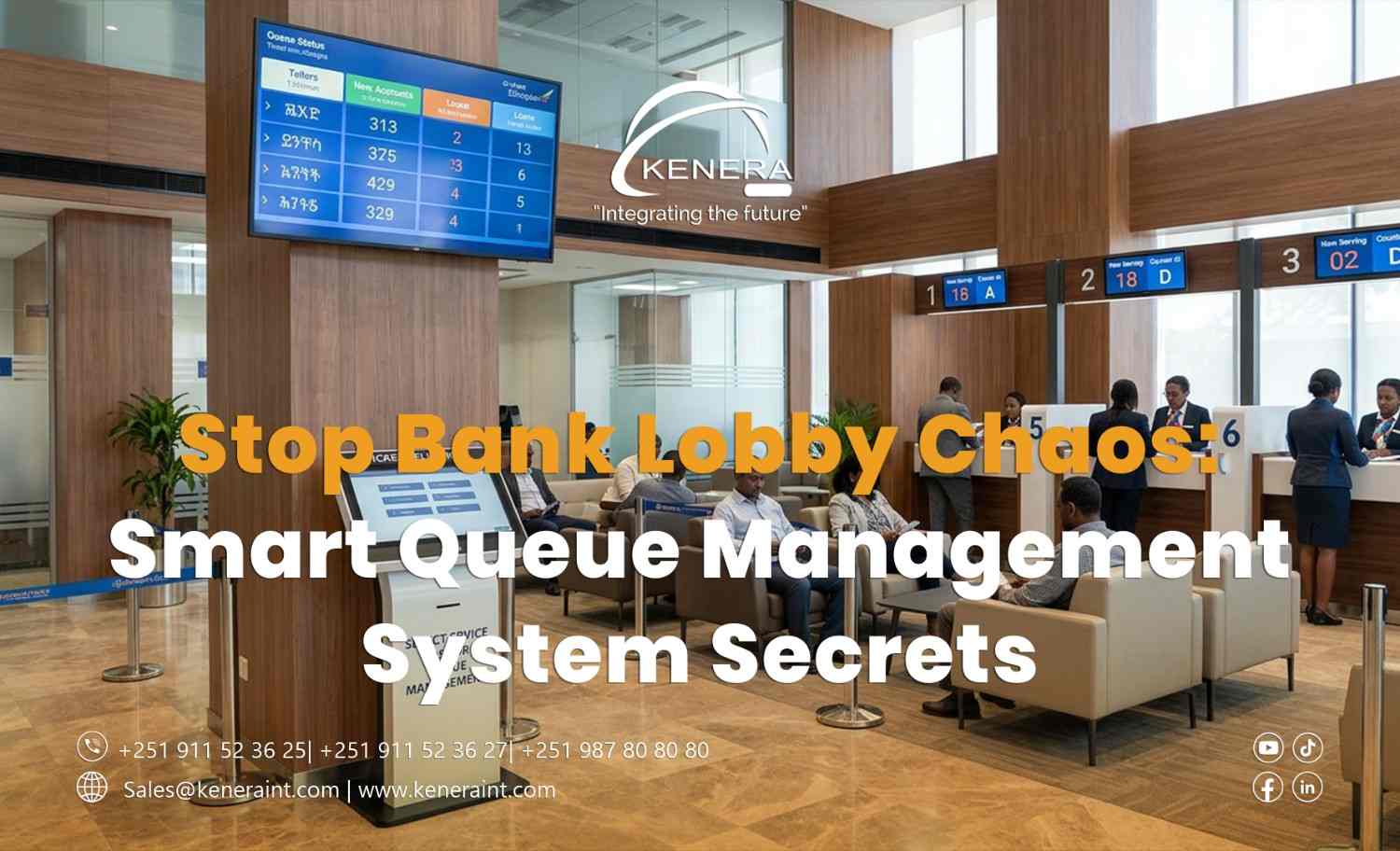
Stop Bank Lobby Chaos: Smart Queue Management System Secrets
It's Monday morning. A bank branch is already crowded.
Customers are standing near service counters. Some are waiting to open accounts. Others need cash services, loan assistance, or customer support.
One customer has been waiting for 40 minutes. Another arrived ten minutes ago but is already being served.
Nobody understands the order.
Employees are overwhelmed. Customers are frustrated. The branch manager sees a crowded lobby but has no reliable way to identify where the delays are happening.
The problem is not necessarily a shortage of employees.
It may be a shortage of intelligent queue management.
This is where a smart queue management system can transform the customer experience and help banks operate more efficiently.
1. Why Traditional Bank Queues Create Operational Problems
Many bank branches still rely on physical lines, manual customer direction, or basic ticket-number systems.
These approaches may work during quiet periods, but problems become more visible as customer traffic increases.
Different customers require different services, and those services take different amounts of time.
A simple cash withdrawal may be completed quickly, while account opening or loan-related assistance can require additional verification and documentation.
When every customer enters the same queue, service counters may become unbalanced.
Some employees remain overloaded while others have available capacity.
Without reliable queue data, managers may struggle to understand whether delays are caused by staffing levels, service complexity, or inefficient customer routing.
A crowded lobby is not just a customer-service problem. It is an operational visibility problem.
2. Smart Ticketing: Direct Customers to the Right Service
A modern bank queue management system begins by identifying the service a customer needs.
Instead of joining an undefined physical line, customers can select a service category through a self-service kiosk or receive assistance from a receptionist.
The system generates a queue ticket and assigns the customer to an appropriate service workflow.
Depending on the configuration, these categories may include:
Cash deposits and withdrawals
Account opening and customer registration
Loan and credit services
Card-related assistance
General customer support
Priority or assisted services
This allows banks to organize customer traffic based on actual service requirements.
For example, customers requiring specialized account services can be directed to employees qualified to handle those requests rather than waiting at an unrelated counter.
The result is a more structured service environment with clearer expectations for both customers and employees.
3. Digital Queue Displays Reduce Confusion
One of the most visible components of a smart queue management system is the digital calling display.
Instead of employees repeatedly shouting ticket numbers, the system presents queue information on electronic screens.
Customers can see which ticket is being called and which service counter they should visit.
Supported systems may also provide audible announcements, multilingual interfaces, and configurable visual layouts.
These features can improve communication in busy branches, particularly when combined with clear signage and accessible customer-service procedures.
Banks can also use designated screens to display approved announcements, service information, or promotional content without interfering with queue instructions.
However, display technology should be designed carefully.
Ticket numbers must remain readable, announcements should be understandable, and customer information should not be unnecessarily exposed.
The goal is not simply to install a screen. It is to make the entire waiting process easier to understand.
4. Real-Time Analytics Reveal Where Customers Are Losing Time
Here is where smart queue management becomes especially valuable for branch managers.
A properly configured system can collect operational measurements such as:
Average customer waiting time
Average service handling time
Number of customers served
Queue length by service category
Customer arrival patterns
Counter utilization and service volume
These metrics help managers identify recurring bottlenecks.
Suppose a branch experiences heavy customer traffic between 11 AM and 1 PM.
Queue analytics may reveal that account-opening requests consistently experience longer waits during that period.
Management can then evaluate staffing schedules, employee assignments, or service processes using actual operational evidence.
Historical reporting can also help organizations compare service performance across branches.
However, analytics should be interpreted carefully. A longer handling time does not automatically indicate poor employee performance; some customer requests are inherently more complex.
The most useful reporting systems support better decisions rather than simply generating more numbers.
5. Intelligent Queue Routing Improves Service Efficiency
Traditional queue systems often follow a basic first-in, first-out process.
Smart systems can support more flexible routing based on service categories, counter availability, employee capabilities, and approved priority rules.
For example, a bank may configure designated counters for specialized services while allowing eligible counters to handle multiple categories during peak periods.
Some platforms also support appointment scheduling, customer notifications, and integration with other branch-service applications.
These capabilities can help reduce unnecessary movement and improve the coordination of customer service.
But intelligent routing does not mean every customer will receive immediate service.
Its effectiveness depends on proper configuration, available staff, realistic service-time expectations, and the bank's operating procedures.
Technology should help employees serve customers more effectively—not create additional complexity for them.
6. Security, Accessibility, and Reliability Matter
A queue management system may appear simple, but enterprise deployments require careful planning.
Banks should evaluate how the platform connects to their internal networks, how administrators access the system, and whether customer information is collected or stored.
Role-based access controls, secure configurations, supported software updates, and appropriate data-retention policies should be considered.
The system should also accommodate customers who need assistance using self-service technology.
Operational continuity is equally important.
What happens if the ticket printer fails?
Can employees continue calling customers if a display becomes unavailable?
Does the branch have a documented manual fallback process during a network or power disruption?
A well-designed deployment considers these situations before the system enters daily operation.
7. Why Smart Queue Management Is a Business Investment
A queue management system should not be evaluated only by the number of tickets it prints or displays it operates.
Its business value comes from improving the way a branch organizes customer interactions.
When implemented effectively, it can help financial institutions:
Create a more orderly and transparent waiting experience.
Improve visibility into branch-service performance.
Identify opportunities to allocate staff more efficiently.
Support consistent service processes across multiple branches.
Make operational decisions using measurable customer-flow data.
Actual improvements depend on the existing service process, implementation quality, and how actively management uses the information.
The technology provides the tools. The organization must turn those tools into better operations.
Turn Every Bank Visit Into a Better Customer Experience
A crowded bank lobby does not have to mean confusion, frustration, and inefficient service.
With smart ticketing, digital calling displays, intelligent customer routing, and real-time analytics, banks can build more organized and measurable service environments.
Kenera International supports organizations seeking modern queue management and enterprise ICT solutions designed around operational efficiency, scalability, and customer-service requirements.
Because customers should not have to fight through a crowd to receive the service they came for.