
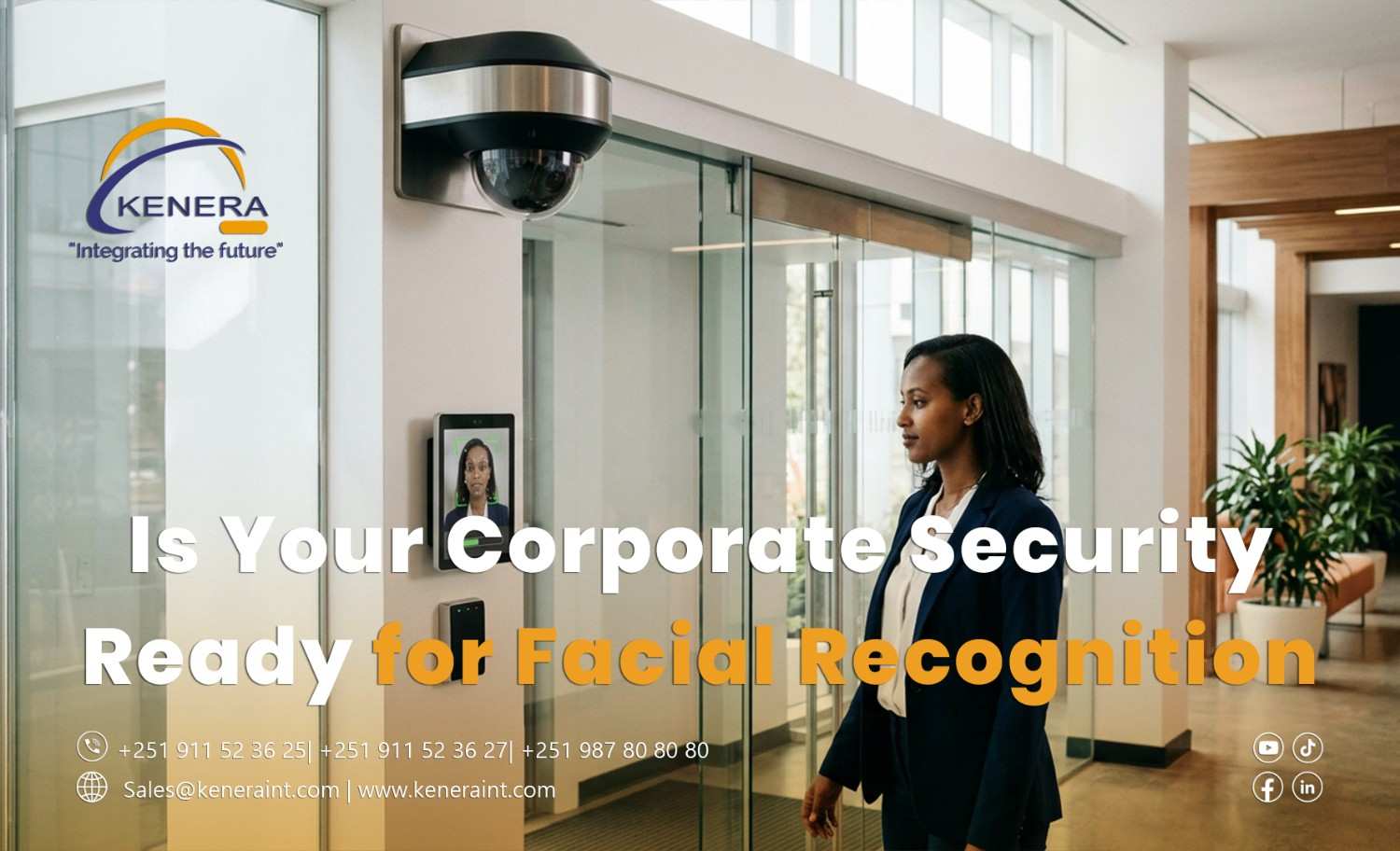
Is Your Corporate Security Ready for Facial Recognition AI?
At 8:30 AM, hundreds of employees begin arriving at a corporate headquarters.
Security officers check identification cards, visitors sign registration books, and reception staff verify appointments.
Everything works—until the morning rush creates long queues.
Now imagine an access-control system that can verify enrolled employees using facial recognition, record entry events, and alert security personnel when an access attempt requires attention.
This is one application of AI facial recognition in corporate security.
But before investing in the technology, organizations need to answer a more important question:
Is their security infrastructure—and their approach to privacy—ready?
1. Facial Recognition Is More Than a Smart Camera
Traditional CCTV systems record activity for security personnel to review.
Facial recognition systems go further by analyzing facial characteristics and comparing them with enrolled biometric templates.
Depending on the system, the technology can support identity verification for access control or compare a captured face against an authorized database.
For example, an employee approaching a restricted server room might be verified against an enrolled identity before access is granted.
However, facial recognition is not the same as ordinary face detection.
Face detection identifies the presence of a face. Facial recognition attempts to determine whether it matches a particular enrolled identity.
Understanding this distinction is essential when evaluating security products.
2. Where Facial Recognition Can Improve Corporate Security
Organizations may consider facial recognition for several operational scenarios.
Employee access control: Verify enrolled personnel entering designated offices, data centers, or restricted facilities.
Visitor management: Support identity checks within a properly authorized visitor registration process.
Security investigations: Help authorized teams review relevant footage where lawful, proportionate, and technically appropriate.
Multi-site administration: Manage approved access permissions across connected facilities through compatible centralized platforms.
These capabilities can improve operational efficiency, but facial recognition should not automatically replace all existing security procedures.
The right deployment depends on the organization's risk profile and legitimate operational requirements.
3. Accuracy Depends on Real-World Conditions
Facial recognition is not infallible.
Lighting, camera positioning, image resolution, facial movement, and changes in appearance can influence matching performance.
False matches may incorrectly associate one person with another. False non-matches may deny access to someone who is authorized.
Performance can also vary across demographic groups and deployment conditions.
Organizations should evaluate vendor accuracy claims using realistic operating scenarios rather than relying exclusively on promotional demonstrations.
For sensitive locations, facial recognition may be more appropriate as one factor within a broader access-control system.
4. Biometric Data Requires Stronger Protection
A password can be changed after compromise.
A person's facial characteristics cannot be replaced in the same way.
That makes biometric information particularly sensitive.
Before collecting facial templates, organizations should establish a clear lawful basis, explain how information will be used, restrict access, define retention periods, and implement appropriate security controls.
Encryption, access logging, secure storage, and documented deletion procedures are important safeguards.
Businesses operating in Ethiopia should also assess applicable requirements under the country's Personal Data Protection Proclamation No. 1321/2024 and any relevant implementing rules.
Facial recognition deployment should involve legal, security, and privacy review—not simply an IT purchasing decision.
5. Five Questions to Ask Before Deployment
What problem are we solving? Determine whether facial recognition provides a meaningful advantage over badges, PINs, or other access-control methods.
Who will be enrolled? Define eligible users and avoid collecting biometric information without a justified purpose.
How will data be protected? Examine template storage, encryption, administrative permissions, retention, and vendor access.
What happens when recognition fails? Provide a secure alternative verification method and procedures for reviewing disputed matches.
Can the system integrate securely? Assess compatibility with existing access controllers, CCTV platforms, network infrastructure, and security monitoring tools.
Organizations should also consider presentation-attack detection, system availability, and the risks of unauthorized biometric surveillance.
Build Intelligent Security on Responsible Foundations
Facial recognition can support faster identity verification and more sophisticated physical access management.
But its value depends on accuracy, appropriate use, strong data protection, and integration with existing security controls.
Kenera International supports organizations in planning and deploying enterprise security infrastructure, including surveillance, access control, networking, and integrated ICT solutions.
The future of corporate security is not simply about recognizing more faces.